
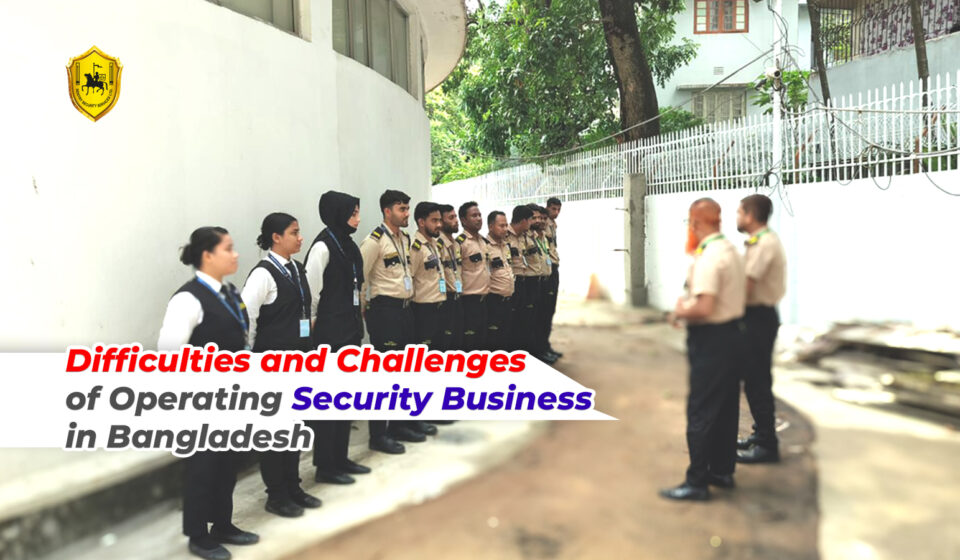

From the outside, the security business looks simple. Hire guards, post them at gates, collect a fee. Easy money, right? But the reality of the challenges of security business in Bangladesh is far harder.
Every guard at a gate is the end of a long chain: licensing, vetting, training, payroll, and supervision that never sleeps. Break one link and the whole thing fails, and it may fall at the worst possible moment. This article walks through what actually makes the business so hard to run.
The Regulatory and Licensing Burden
Every private security firm in the country operates under the Bangladesh Private Security Act, 2006, and the paperwork never really stops. A company needs a valid licence to operate, and keeping it means renewals, records and cooperation with the police and home ministry.
Compliance is not a one-time hurdle. Rules shift, inspections happen, and a single lapse can suspend the licence the whole business depends on. For a small operator, the administrative load alone can rival the cost of running the guards.
Workforce Challenges for a Security Company in Bangladesh
People are the product, and people are the hardest part. A security company in Bangladesh lives or dies on the guards it can recruit and keep.

Recruiting and Retaining Reliable Security Guards
Good candidates are scarce. The work is demanding, the pay is modest, and better-paying jobs pull dependable people away. Vetting matters too, because a guard with the wrong background is a risk rather than a safeguard, yet proper checks take time and money many firms would rather not spend.
The Cost and Difficulty of Proper Training
A guard is only as good as the training behind them. Real instruction in patrol discipline, fire response, access control, and conduct costs money and takes weeks. Untrained recruits are exactly the ones who freeze when a site is attacked. Firms that skip this save on paper and pay for it in the field.
High Turnover and Wage Pressure
Turnover is relentless. Guards leave for a few hundred taka more elsewhere, and every departure means recruiting and training all over again. Clients pushing for the lowest rate make it worse, squeezing the very budget that retention depends on.
The Armed Guard Problem: Licensing and Liability
Deploying an armed guard raises the stakes on every front. It is the most demanding service a firm can offer, and the one with the least room for error.
Legal Restrictions on Deploying an Armed Guard
Weapons are tightly controlled. An armed guard cannot simply be posted like an unarmed one, since firearms require specific licences, approved personnel, and lawful grounds for each posting. Get any part of that wrong and the liability lands on the company.
Sourcing Arm Guards, Permits, and Insurance
Equipping armed personnel means sourcing weapons, permits, insurance, and the protective kit that goes with the role, including arm guards and other equipment. None of it is cheap, and all of it is regulated. Insurance in particular is a high, recurring cost that reflects how much can go wrong.
Risk and Accountability When an Armed Guard Is Involved
When an armed guard is on duty, the company owns the outcome. A wrongful discharge, an accident, or a weapon lost to a gang becomes the firm’s legal and reputational problem. That accountability is why serious providers train armed personnel far harder than the market requires.
Delivering the Full Range of Security Guard Services
Clients rarely want just one thing. A credible provider has to deliver a full range of security guard services and hold the same standard across all of them, and each type carries its own difficulty.
The Realities of Manned Guarding on the Ground
Manned guarding is the backbone of the industry and the hardest to keep consistent. A gate covered around the clock needs shifts, relief staff, and supervision every day, at every site. Standards slip the moment supervision does.
Meeting Demand for Corporate Security Services
Corporate security services come with higher expectations. Banks, offices, and industrial clients want vetted guards, clean reporting, and staff who represent the client as much as they protect them. Holding that bar across many sites at once is a management problem, not just a staffing one.
The Special Pressures of Event Security
Event security compresses all of it into a few hours. Large crowds, temporary layouts and unfamiliar venues demand planning and numbers that a normal posting never does, and there is no second chance if it goes wrong on the night.
Financial and Operational Pressures
The economics are unforgiving. Here is a breakdown of some financial and operational pressures a security company faces:
Thin Margins and the Race to the Bottom on Price
Clients often buy on price, and rivals chase them down to it. The saving almost always comes out of training and supervision, the two things that matter most, which drags quality across the whole market and punishes anyone trying to do it properly.
Delayed Payments and Cash-Flow Strain
Guards must be paid on time every month. Clients do not always return the favour. That gap forces firms to fund wages from their own pocket while invoices clear, and cash-flow strain has closed more security companies than any robbery.
Managing Operations Across Many Districts
Scale brings its own trouble. Supervising posts spread across many districts means logistics and local management that a single-city firm never faces. Consistency at that scale is genuinely hard.
Trust, Reputation, and Client Expectations
Trust is the hardest thing to hold in this business, and the easiest to lose. A single incident can undo a security company’s reputation even when every SOP was followed to the letter. A robbery attempt during a cash in transit run, for example, is difficult to stop even for trained armed guards. Yet clients judge the outcome, not the effort behind it. That is the harsh arithmetic of the industry.
Competing Against Untrained, Informal Providers
The market is crowded with informal operators supplying cheap, untrained watchmen at rates no serious firm can match. They compete on price alone, and every failure by one of them makes clients warier of the whole industry.
Proving Quality When the Cheapest Quote Usually Wins
A serious firm has to prove its worth against a number on a page. Explaining why trained, supervised, insured guards cost more than a man on a plastic chair is a constant sell, and the proof only becomes obvious after something goes wrong.
Guard Injuries, Robberies, and Duty-of-Care Obligations
Guards stand between criminals and the target, and they get hurt doing it. A firm carries a duty of care for staff who face real violence, and meeting it takes backup and support that cost money and effort.
When Security Fails: The Reputational Damage
One serious failure can undo years of work. A robbery on your watch, a guard asleep at the gate, and word travels fast. Reputation in this industry is slow to build and quick to lose.
What It Takes to Run a Credible Security Service Company in Bangladesh
The firms that last treat these difficulties as the job, not as obstacles to cut around. That means real licensing, in-house training, proper supervision, and someone answerable when standards slip. It is the reason a company like Sentry Security Services Ltd, operating since 1995 and operating across all 64 districts, can hold contracts with banks, embassies, and industrial clients that a low-cost provider cannot keep.
Running a credible security service company in Bangladesh is expensive and demanding by design, and that is exactly what separates the firms worth hiring from the ones worth avoiding.
Frequently Asked Questions
What Are the Main Challenges of Running Security Services in Bangladesh?
The hardest are recruiting and keeping trained guards, meeting the licensing rules under the 2006 Act, surviving on thin margins, and supervising posts reliably across many sites. Providing security services in Bangladesh is a low-margin, high-responsibility business.
What Licences Does a Security Company in Bangladesh Need to Operate?
A security company in Bangladesh must hold a valid operating licence under the Bangladesh Private Security Act, 2006, and keep it current through renewals and compliance with the police and home ministry. Armed services require additional weapons licensing.
How Hard Is It to Recruit and Retain Good Security Guard in Bangladesh?
Difficult, very difficult. Demanding work and modest pay make reliable candidates scarce, and turnover is high because guards leave for slightly better wages. Proper vetting and training add cost that many firms avoid, which is why quality varies so widely.
What Are the Legal Rules for Deploying an Armed Guard?
An armed guard requires specific firearm licences, approved personnel and lawful grounds for each posting, along with insurance and the right equipment such as arm guards. The company carries full liability for how the weapon is used or secured.
What Types of Security Guard Services Are Most in Demand?
Manned guarding is the core, followed by corporate security services for banks and offices, and event security for gatherings. The right mix of security guard services depends on the client, but trained supervision is the common thread.
How Do Corporate Security Services Differ From Event Security?
Corporate security services are ongoing and standards-driven, protecting fixed sites with vetted, well-presented guards. Event security is short and intense, needing crowd planning, larger numbers and tight coordination for a single occasion.
Is Running a Security Service Company in Bangladesh Profitable?
It can be, but margins are thin. Price competition, delayed client payments and the real cost of training and compliance mean a security service company in Bangladesh only stays profitable through discipline, scale, and clients who value quality over the cheapest quote.
How Do I Choose a Reliable Security Service Company in Bangladesh?
The cheapest quote usually cuts the training and supervision you are looking for. So, look past the price. Check for genuine licensing and ISO certification, an in-house training standard, a track record with serious clients, and the lawful ability to supply armed guards where needed. Sentry Security Services provides all of it and is one of the most reliable and trusted security service companies in Bangladesh.
The Future of Security Services in Bangladesh
The pressures are not easing. If anything, clients are asking for more: better-trained guards, cleaner reporting, and providers who can be held to account. That favours firms willing to invest in people and standards, and it slowly squeezes the informal operators who cannot. For anyone serious about the business, the way forward runs through professionalism, not price-cutting. Demand for security services in Bangladesh will keep rising. The real question is who will be trusted to meet it.